Which Nut Is Better for Daily Snacking: Almonds or Cashews?
Both almonds and cashews are nutrition-dense superfoods, but they excel in distinct health and snacking roles. Almonds (California Nonpareil grade) take the lead in dietary fiber (12.5g per 100g vs 3.3g in cashews), Vitamin E (26mg vs 0.9mg), and plant protein (21g vs 18g), making them ideal for weight management, satiety, and digestive balance. Cashews (W240/W320 grade) win in bioavailable mineral density—delivering significantly higher iron (6.7mg per 100g vs 3.7mg), zinc (5.8mg vs 3.1mg), and copper—alongside a buttery texture and faster calorie conversion for quick workday energy.
When dry-roasted or hot-air roasted without continuous commercial frying oil immersion, both nuts serve as far healthier daily choices than deep-fried namkeen or starch-laden potato chips.
“Choose almonds when seeking maximum dietary fiber, Vitamin E, and prolonged satiety; choose cashews for iron, zinc, creamy mouthfeel, and rapid cognitive reboot.”
The Premium Nut Shift: From Festive Gifting to Daily Productivity
For generations in Indian households, almonds and cashews occupied a prized position locked inside festive Diwali gift boxes, wedding thalis, and rich festival sweets like kaju katli and badam halwa. Whole nuts were viewed as luxury treats reserved for special occasions or traditional winter recipes.
Over the last three years, Indian FMCG snacking habits have undergone a structural shift. Working professionals, fitness enthusiasts, and mindful families are bringing premium nuts directly onto their office desks, study tables, and evening tea trays. With quick-commerce delivery and hygienic micro-packaging, nuts are replacing fried bhujia and refined biscuits as daily energy anchors.
However, consumers routinely ask: 'Should I keep a bowl of roasted almonds or roasted cashews at my desk?' Understanding their roasting chemistry, lipid structures, micronutrient profiles, and practical shelf stability is key to making the best choice.
Roasting Science: How Thermal Processing Elevates Almonds and Cashews
Raw nuts contain naturally occurring moisture and subtle plant compounds that can feel heavy on digestion if consumed in large quantities. Precision roasting alters both physical texture and sensory flavour profiles through thermal chemistry:
• Maillard Reaction & Flavor Development: Exposing whole almond kernels and cashew nuts to controlled dry heat (130°C–150°C) triggers the Maillard reaction between natural amino acids and reducing sugars. This transforms mild raw seeds into golden, aromatic nuts with signature acoustic crunch.
• Dry Hot-Air Roasting vs Oil Submersion: Conventional mass-market brands often flash-fry nuts in boiling palm oil or hydrogenated fats to cut processing time. This adds excess saturated fat, masks natural nut sweetness, and leaves greasy finger residue on touchscreens and keyboards. In contrast, precision hot-air roasting expands the internal cellular matrix without oil immersion, preserving natural monounsaturated fats while keeping fingers clean.
• Moisture Removal & Crunch Integrity: Roasting reduces raw moisture levels below 2%, locking in crunch and extending natural shelf life when protected in nitrogen-flushed barrier pouches.
“Hot-air dry roasting uses gentle heat to unlock golden aroma and acoustic crunch without adding commercial frying oils or leaving greasy fingers.”
Almonds vs. Cashews Head-to-Head: Lipids, Protein & Micronutrients
Comparing 100g of dry-roasted California almonds and whole Indian/African cashews reveals clear functional differences:
• Calorie & Total Fat Density: Almonds contain approximately 579 kcal and 50g of total fat per 100g, dominated by heart-healthy Monounsaturated Fatty Acids (MUFA - oleic acid). Cashews contain roughly 553 kcal and 44g of total fat, with a balanced ratio of MUFA and healthy saturated stearic acid that yields their signature creamy melt-in-mouth mouthfeel.
• Dietary Fiber & Gut Health: Almonds are a clear winner for fiber content, supplying 12.5g of dietary fiber per 100g (over 40% of daily recommended intake). Cashews provide 3.3g per 100g. High fiber in almonds slows glucose absorption, preventing afternoon sugar crashes.
• Micronutrients & Mineral Superiority: Cashews excel in mineral density, delivering 6.7mg of iron per 100g (nearly double that of almonds) and 5.8mg of zinc, vital for immune function and cellular repair. Almonds counter with an astonishing 26mg of Vitamin E (a potent antioxidant protecting skin and cell membranes) and 270mg of magnesium.
• Satiety & Glycemic Load: Both nuts possess a low Glycemic Index (GI < 20). Eating a handful (25g–30g) during the 4 PM office slump signals satiety hormones (CCK and PYY), curbing unwanted hunger until dinner.
4 Practical Rules for Buying and Storing Premium Packaged Nuts
To enjoy peak crispness, rich aroma, and full nutritional value, follow these four FMCG buying and storage rules:
1. Kernel Grade Verification: For almonds, look for bold California Nonpareil or Independence grades with smooth, unbroken outer skins. For cashews, choose whole kernel grades like W240 (large) or W320 (standard) with clean ivory-white color and zero black spots.
2. Clean Spice Formulations: Flavoured nut options (such as Masala or Salted) should feature authentic ground spices—such as rock salt, amchur, roasted cumin, or black pepper—applied with minimal edible oil mist rather than synthetic flavor enhancers or artificial color dyes.
3. Moisture & Oxygen Barrier Foil: Nut lipids oxidise rapidly when exposed to atmospheric oxygen, humidity, or sunlight, resulting in stale 'rancid' off-flavours. Always select nitrogen-flushed, multilayer aluminum-foil laminated pouches.
4. Home Pantry Care: After opening a pouch, transfer unused nuts to an airtight glass or stainless steel jar stored in a cool, dry place away from stove steam. In hot summer or humid monsoon months, storing nut jars in the refrigerator keeps natural oils fresh for months.
The BN BundleNuts Mehnga Sauda & Dry Fruit Range
At BN BundleNuts, our Mehnga Sauda and Dry Fruits series brings uncompromising sourcing and roasting standards to everyday consumers and institutional buyers.
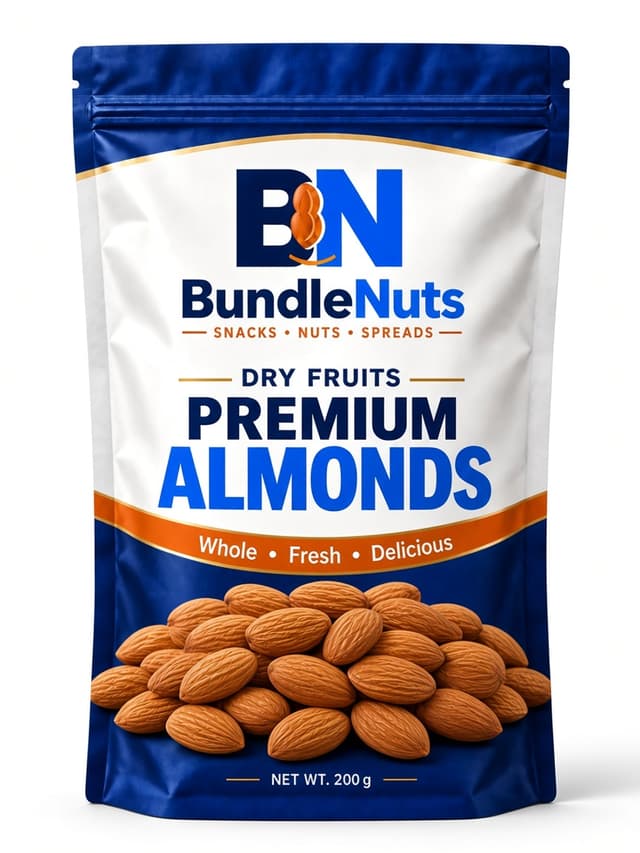
Our Salted Roasted Almonds and Masala Roasted Almonds use premium bold California kernels, slow-roasted in hot air and seasoned with authentic regional spices. Our Salted Roasted Cashews and Masala Roasted Cashews feature whole cream-white cashew kernels crafted for an exquisite crunch without greasy residue.
Available in 100g re-sealable stand-up pouches, 200g family value packs, 500g bulk jars, and curated Diwali gift boxes, BundleNuts guarantees zero trans fats, clean fingers, and dependable FMCG quality for every home and office.