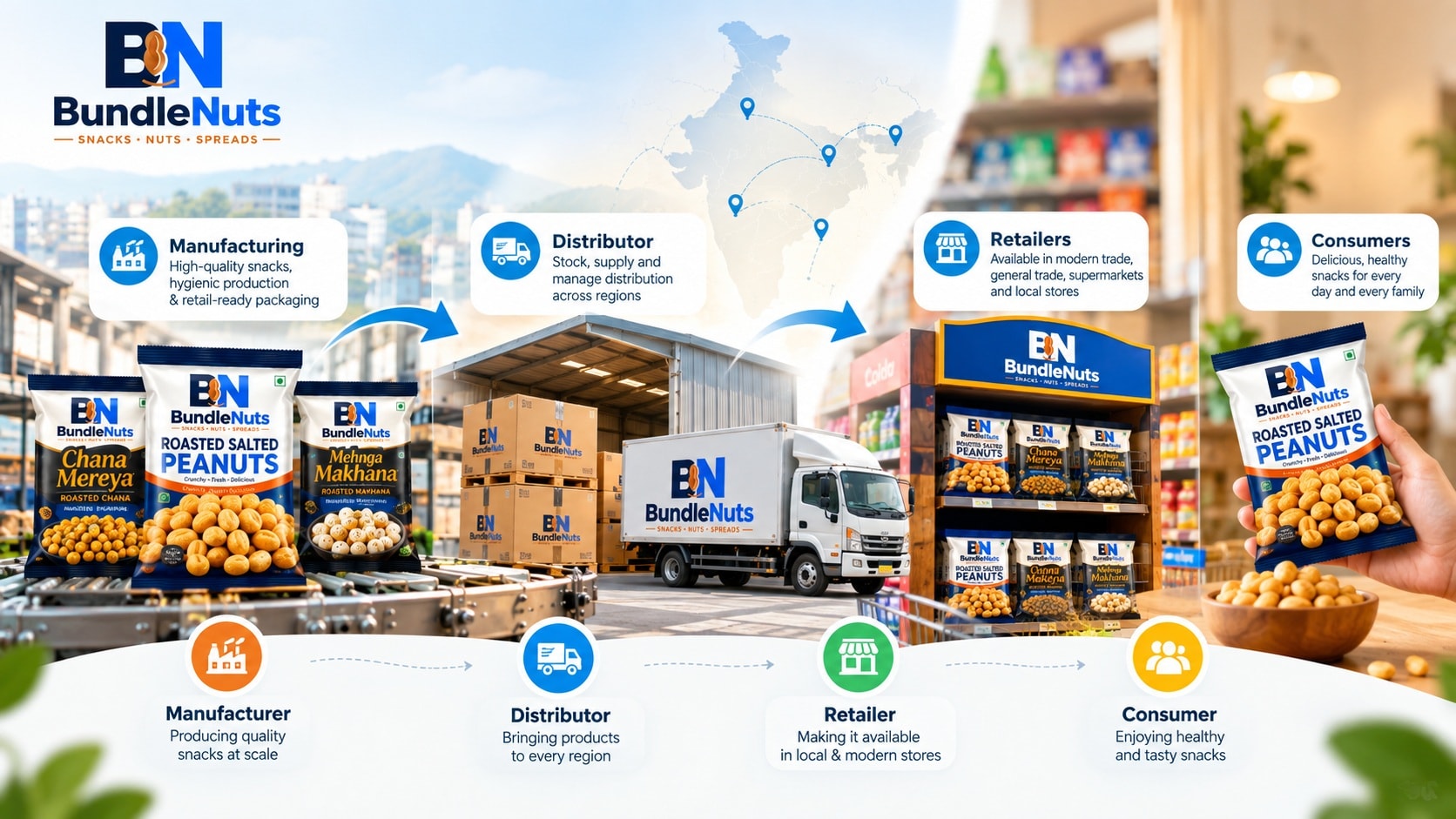
How Does FMCG Snack Distribution Work in India?
FMCG snack distribution in India operates through a multi-tier network moving products from manufacturers to Super Stockists, City Distributors, Wholesalers, and Retail Outlets (Kiranas, Supermarkets, HORECA, and Quick Commerce). To succeed, a snack brand requires retail-ready packaging (hanging laddis, counter displays), stable 6 to 9-month shelf life, competitive channel margins (typically 8%–12% for distributors and 15%–20% for retailers), high product velocity, and reliable primary/secondary supply logistics.
“High product rotation, hygienic barrier packaging, and attractive trade margins form the core formula for sustainable FMCG snack distribution.”
The Architecture of India’s ₹1 Lakh Crore Packaged Snack Market
India’s fast-moving consumer goods (FMCG) ecosystem is one of the most dynamic retail markets globally. At the heart of this growth is the packaged snacking sector—a rapidly scaling category approaching ₹1,000,000 million (₹1 lakh crore) in annual market size.
While digital e-commerce and 10-minute quick-commerce platforms have expanded rapidly in metro cities, General Trade (traditional neighborhood kirana stores, pan shops, and travel kiosks) continues to generate over 80% of total packaged food volumes across India. Connecting a manufacturing facility to millions of retail shelves requires a disciplined, well-structured distribution architecture.
For stockists, regional distributors, institutional buyers, and retail partners, selecting the right FMCG snack brand means evaluating trade margins, product shelf-life, packaging durability, consumer repeat demand, and partner support systems.
Understanding the FMCG Snack Value Chain: From Factory to Counter
To navigate snack wholesale and distribution, business partners must understand how products flow through the traditional and modern trade channels:
1. Brand Manufacturer (BundleNuts): Formulates, roasts, hygienically packs, and quality-tests products while managing brand marketing and regulatory compliance.
2. Carrying & Forwarding Agents (CFA) / Super Stockists: Maintain state-level inventory hubs, ensuring seamless primary order fulfillment and buffer stock management for city-level distributors.
3. Authorised City / Regional Distributors: Hold exclusive or area-wise distribution rights. Distributors manage sales beats, supply stock to local retailers, manage credit cycles, and collect secondary market feedback.
4. Wholesale Markets: Supply rural stockists, semi-urban retailers, and institutional buyers seeking bulk volume transactions without direct distributor beats.
5. Retail Outlets (General & Modern Trade): The final touchpoint where consumers purchase snacks—spanning kirana stores, supermarket chains, office pantries, fuel stations, and HORECA (Hotels, Restaurants, Cafes).
“An efficient distribution network minimizes stockout risk at the retail counter while maintaining stock freshness through fast inventory turnover.”
What Makes a Packaged Snack Truly 'Retail-Ready'?
Retailers operate with limited counter real estate. For a new packaged snack brand to earn space on a kirana counter or supermarket shelf, it must fulfill four mandatory FMCG retail criteria:
• Impulse Price Point Strategy: The ₹10, ₹20, and ₹50 price points drive trial purchases. Single-serve 35g impulse packs require zero consumer deliberation and generate rapid cash register turnover.
• High-Impact Merchandising Packaging: Bright, color-coded pouch designs with clear window cutouts allow consumers to inspect product quality immediately. Secondary packaging—such as 12-pack vertical hanging strips (laddis) and corrugated display boxes—allows retailers to hang products easily without taking up counter flat space.
• Shelf-Life Integrity & Moisture Protection: Packaged snacks like roasted peanuts, chana, and makhana require protective multi-layer metallized foil pouches with nitrogen flushing. This blocks oxygen and moisture, guaranteeing crisp texture for 6 to 9 months across varied Indian climate zones.
• Complete FSSAI & Barcode Compliance: Every SKU must display statutory FSSAI licenses, nutritional tables, clear MRP, net weight, batch coding, manufacture dates, and EAN/UPC barcodes for modern trade POS scanners.
Channel Margins & ROI: The Financials of Snack Wholesale
Sustainable FMCG distribution relies on balanced trade economics that reward every channel partner for their investment in inventory and logistics:
• Distributor Margin (8% – 12%): Covers local warehousing, sales force beat travel, delivery vehicle logistics, and short-term retail credit management.
• Retailer Margin (15% – 25%): Incentivizes kiranas and modern trade stores to provide prominent eye-level counter placement and actively recommend products to shoppers.
• Return on Investment (ROI) & Velocity: In FMCG, margin percentage is only half the equation. High product velocity (stock turning over every 7–10 days) yields significantly higher annual ROI for distributors compared to slow-moving high-margin unbranded items.
The BN BundleNuts B2B Advantage for Distributors & Retailers
At BN BundleNuts, we design our product portfolio to support long-term distributor profitability and retailer confidence:
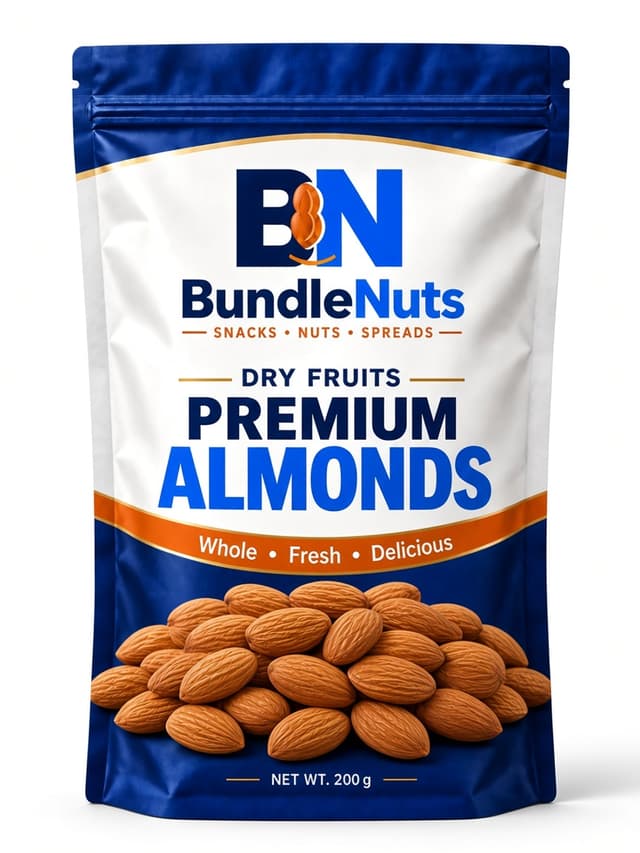
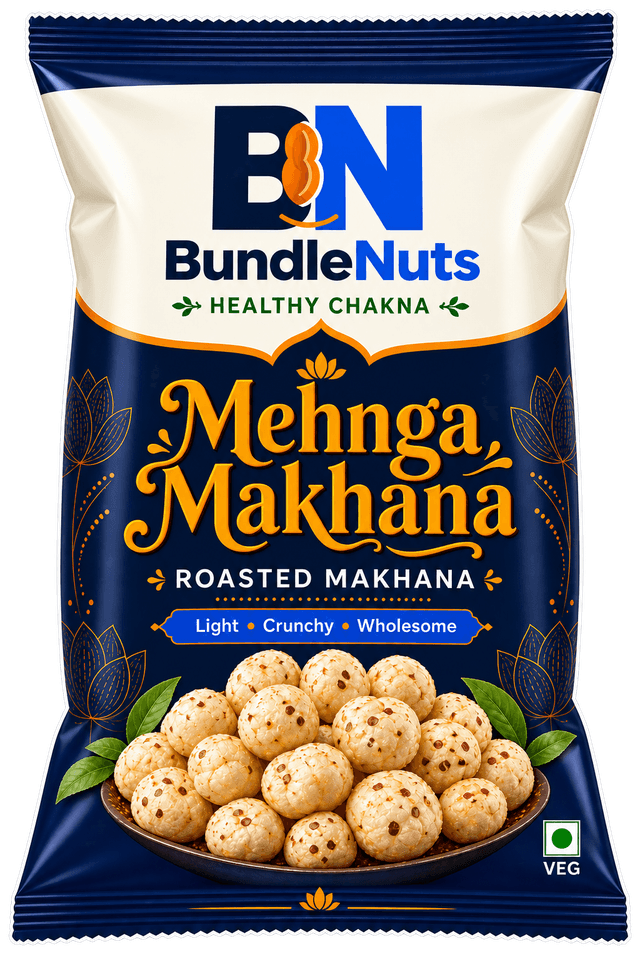
• Diverse Product Portfolio: High-repeat Daily Chakhna (Salted & Masala Roasted Peanuts, Roasted Chana), Healthy Chakhna (Roasted Makhana, Diet Mixes), and Mehnga Sauda (Premium Roasted Almonds & Cashews).
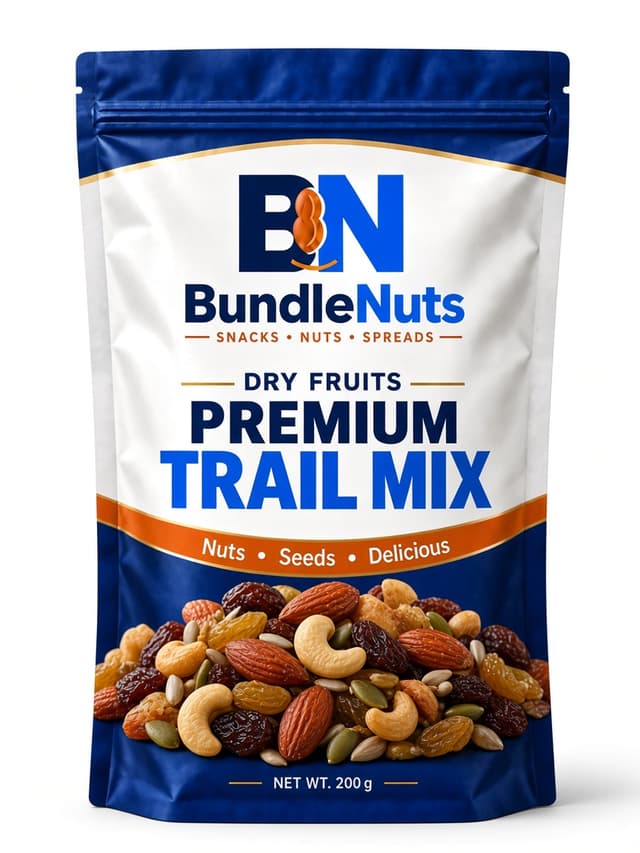
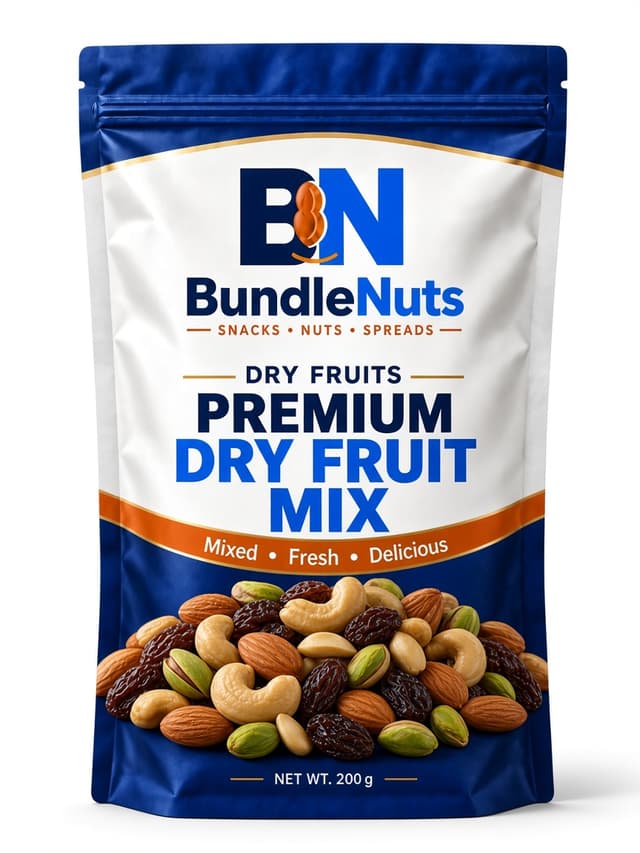
• Flexible Pack Format Hierarchy: Ranging from ₹10 / 35g impulse pouches and 70g daily desk packs to 200g family value pouches and 1kg institutional bulk packs for hotels, cafes, corporate pantries, and caterers.
• Hygienic Quality & Zero Trans Fat: Hot-air roasted without continuous commercial frying oil immersion, delivering non-greasy, consistent quality that builds repeat consumer trust.
• Transparent Commercial Partnership: Verified distributor support, marketing collaterals, promotional schemes, and reliable logistics fulfillment across Uttar Pradesh, North India, and expanding pan-India routes.
Frequently Asked Questions on Snack Distribution
Explore answers to common questions asked by prospective FMCG distributors, stockists, and retail buyers.