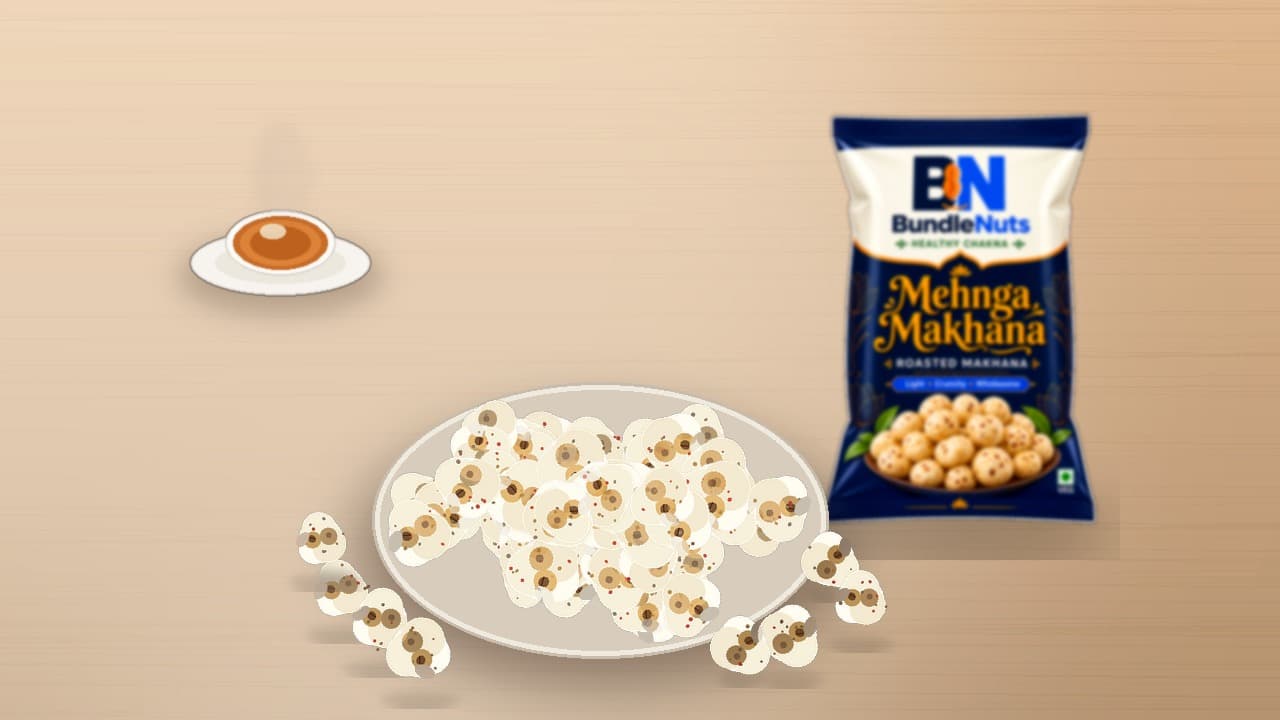
Is Roasted Makhana Better Than Potato Chips for Daily Snacking?
Roasted makhana (puffed lotus seeds/foxnuts) is significantly superior to standard potato chips for daily snacking. While potato chips are slice-cut and deep-fried in hot palm oil—absorbing 30g–35g of fat per 100g—makhana is slow-roasted or air-expanded with minimal oil. Per 100g, slow-roasted makhana contains approximately 350 kcal and under 3g–5g of fat, compared to 530+ kcal and 33g of fat in potato chips. Additionally, makhana delivers 9.7g of plant protein, 67mg of calcium, and dietary fiber without causing heavy oil residue or midday sluggishness.
“Choosing roasted makhana over potato chips cuts fat intake by over 70% while adding essential minerals and a satisfying acoustic crunch.”
The Battle of the 4 PM Crunch: Why Potato Chips Are Losing Ground
For over three decades, the ultra-thin, deep-fried potato chip reigned supreme as India's default 4:00 PM snack. From impulse ₹10 pouches bought at corner kiranas to party-sized foil bags served at family gatherings, potato chips provided instant salty satisfaction.
However, modern Indian consumers are increasingly re-evaluating their daily dietary habits. Frequent consumption of deep-fried potato slices introduces high levels of saturated fats, oxidized frying oils, excessive sodium, and simple refined starches that cause rapid blood sugar spikes followed by severe energy crashes.
Enter Makhana (Euryale ferox, also known as foxnuts or lotus seeds). Harvested from aquatic plants in eastern India, makhana has made a meteoric transition from traditional fasting food to a mainstream modern FMCG snack category. But when compared head-to-head on nutrition, processing science, and shelf stability, how does makhana stack up against the potato chip?
Roasting Science vs. Deep-Frying: How Processing Alters Nutrition
The fundamental nutritional divergence between makhana and potato chips lies in their manufacturing and processing methods:
• Deep-Frying Potato Chips: Raw potato slices contain up to 80% moisture. When dropped into continuous deep-fryers filled with commercial palm oil or rice bran oil at 180°C (356°F), water rapidly vaporizes from the cellular matrix. Hot oil rushes in to occupy the microscopic voids left by evaporating water, turning a low-fat root vegetable into an oil-saturated chip containing up to 35% fat by weight.
• Hot-Air Roasting Makhana: Foxnut seeds naturally pop open when exposed to high heat in specialized roasting pans or hot-air chambers. The internal moisture turns to steam, creating a lightweight, porous puffed structure without needing any external oil. During seasoning, modern FMCG roasters apply only a microscopic oil mist so authentic spices—like rock salt, black pepper, or peri peri—adhere cleanly to the kernel.
“Deep frying replaces potato water with absorbed frying oil. Hot-air roasting expands makhana naturally using internal steam, keeping fat content near zero.”
Calorie & Fat Density Comparison: The Numbers Unpacked
When evaluating snacks, volume and caloric density play a massive role in satiety. Because makhana is lightweight and highly expanded, a 30g serving of makhana fills a much larger bowl than 30g of dense potato chips:
• Caloric Load: 100g of commercial potato chips delivers roughly 530 to 550 kcal. In contrast, 100g of plain roasted makhana provides approximately 347 to 360 kcal.
• Fat Content: Potato chips contain 32g–36g of total fat per 100g (including high levels of saturated fatty acids from frying palm oil). Slow-roasted makhana contains under 2g–5g of total fat per 100g when processed with precision seasoning.
• Protein & Micronutrients: Makhana provides approximately 9.7g of plant protein per 100g alongside 67mg of calcium, 500mg of potassium, and magnesium. Potato chips deliver only ~6g of protein and negligible bone-building minerals.
• Glycemic Response: The simple starches in fried potatoes break down rapidly into glucose, leading to insulin spikes. Makhana contains complex carbohydrates and dietary fiber, yielding a slower, more sustained release of energy.
How to Choose and Store Quality Packaged Makhana
Not all makhana packs deliver equal crunch and purity. When buying packaged makhana, keep these four quality rules in mind:
1. Kernel Size Grade: Premium makhana is graded by raw seed diameter (such as 4+ or 5+ sieve size, often called 5-star or jumbo grade). Larger kernels yield a bigger, fluffier crunch with fewer hard unpopped shell fragments.
2. Clean Spice Formulations: Look for clear seasoning disclosures. Premium brands use natural spices (rock salt, amchur, cumin, chilli, black pepper) rather than artificial MSG enhancers or synthetic red food dyes.
3. Moisture Barrier Packaging: Makhana is naturally hygroscopic, meaning it rapidly absorbs ambient humidity and loses its crispness if exposed to air. Ensure packs feature multilayer metalized foil barrier pouches, ideally nitrogen-flushed to protect freshness.
4. Proper Home Storage: Once opened, store unused makhana in an airtight glass or food-grade stainless steel container away from direct sunlight. If makhana loses crispness due to ambient moisture, a quick 60-second dry toast in a warm pan instantly restores its crunch.
The BN BundleNuts Approach to Roasted Makhana
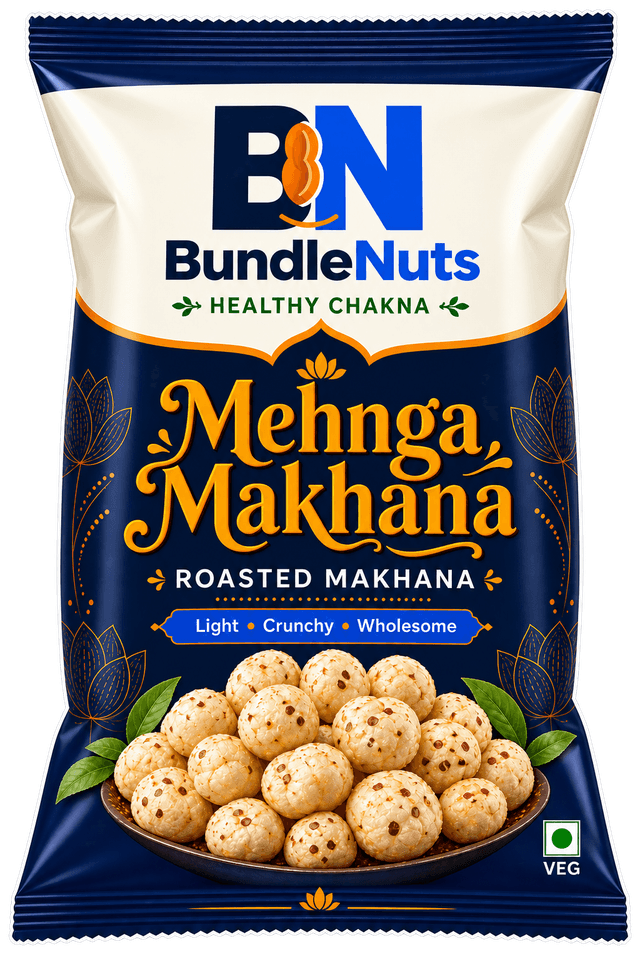
At BN BundleNuts, our Healthy Chakhna series includes handcrafted roasted makhana engineered for modern, mindful Indian homes and workplaces.
We source premium jumbo-grade foxnuts directly from certified growing regions, slow-roast them in hot air without submerging in commercial fryers, and season them with authentic spice profiles like Classic Salted, Indian Masala, and Peri Peri.
Packed in moisture-proof, nitrogen-flushed pouches, BundleNuts Makhana offers clean fingers, zero trans fats, and dependable FMCG quality for everyday desk snacking, family tea-time, and modern retail shelves.