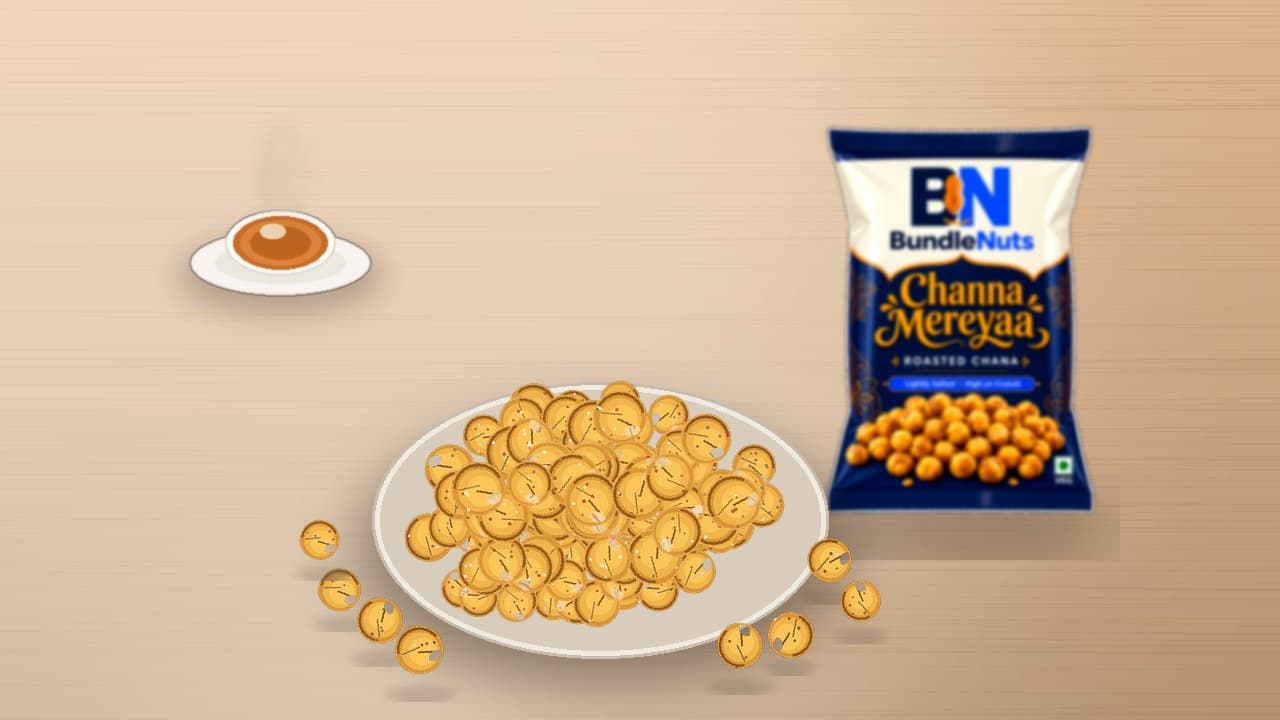
Why Is Roasted Chana Superior to Deep-Fried Namkeen for Daily Snacking?
Dry-roasted chana (Bengal gram / chickpea) is vastly superior to traditional deep-fried namkeen (sev, bhujia, mathri) for everyday consumption. Deep-fried namkeen mixtures absorb up to 35%–40% fat from boiling palm or vegetable oil, delivering over 550 kcal per 100g with high saturated fats and sodium. In contrast, dry-roasted chana is slow-roasted without oil immersion, containing under 5g of fat, 18g of plant protein, and 17g of dietary fiber per 100g. It stabilizes blood sugar, aids satiety, and leaves no greasy residue on fingers or keyboards.
“Replacing oil-soaked fried namkeen with dry-roasted chana slashes fat intake by 80% while providing 17g of digestion-friendly dietary fiber.”
The Evening Tea Break Dilemma: Moving Beyond Fried Bhujia
Across Indian households, corporate pantries, and neighborhood tea stalls, evening tea time is an essential daily break. For generations, the default crunch accompanying hot cutting chai or green tea has been oil-fried namkeen—from thin gram-flour sev and spicy bhujia to flaky fried mathris and spiced fried peanuts.
While fried namkeen delivers immediate salty satisfaction, frequent daily consumption comes at a steep physiological cost. Continuous frying in commercial oils creates oxidized fats, high caloric density, and excessive sodium loads that cause acid reflux, lethargy, and long-term metabolic strain.
Modern Indian consumers and workplace snackers are turning toward roasted alternatives. At the forefront of this shift is Roasted Chana (chana/Bengal gram). But how exactly does roasted chana compare with fried namkeen when examined through processing science, nutritional density, and everyday retail availability?
Roasting Science vs. Oil Frying: How Thermal Processing Works
The stark contrast between roasted chana and fried namkeen originates in their thermal processing mechanics:
• Continuous Deep Frying (Fried Namkeen): Raw chickpea dough (besan) is extruded into hot commercial oil at 170°C–190°C. As moisture boils off, frying oil infiltrates the delicate dough matrix, turning a legume base into a calorie-dense, oil-saturated snack with 30g to 40g of absorbed fat per 100g.
• High-Heat Dry Roasting (Roasted Chana): Whole Bengal gram legumes with intact outer skins are subjected to hot-air circulation or sand-bed roasting at high temperatures (200°C–240°C) for brief intervals. Internal moisture rapidly expands, cracking open the husk and producing a light, crisp texture without needing any external frying oil.
“Dry roasting uses thermal air expansion to create crisp crunch without oil bath submersion, preserving natural leguminous nutrients intact.”
Protein, Fiber & Glycemic Response: The Numbers Unpacked
Evaluating the nutritional profiles of dry-roasted chana versus commercial fried namkeen reveals why roasted legumes win for daily wellness:
How to Choose and Store Crisp Packaged Roasted Chana
To enjoy maximum freshness, aroma, and crunch from packaged roasted chana, consider these four practical FMCG selection rules:
1. Whole vs. Split Kernel Grade: Look for uniform, bold-sized whole chana (or split chana) with clean, crisp hull separation. Avoid packs with excess powder or crushed fragments.
2. Natural Seasoning Integrity: Choose brands that use authentic ground spices—such as black salt, amchur, cumin, and rock salt—applied with minimal edible oil mist rather than synthetic flavor enhancers or artificial food dyes.
3. Moisture Barrier Packaging: Roasted chana easily absorbs ambient humidity from air, leading to sogginess. Select multilayer foil-laminated pouches featuring nitrogen flushing for shelf-life stability.
4. Home Storage Practice: Store open packs in airtight stainless steel or glass jars in a cool, dry pantry. If ambient humidity reduces crispness, a quick 60-second dry toast in a warm skillet restores its signature acoustic crunch.
The BN BundleNuts Approach to Roasted Chana & Daily Chakhna
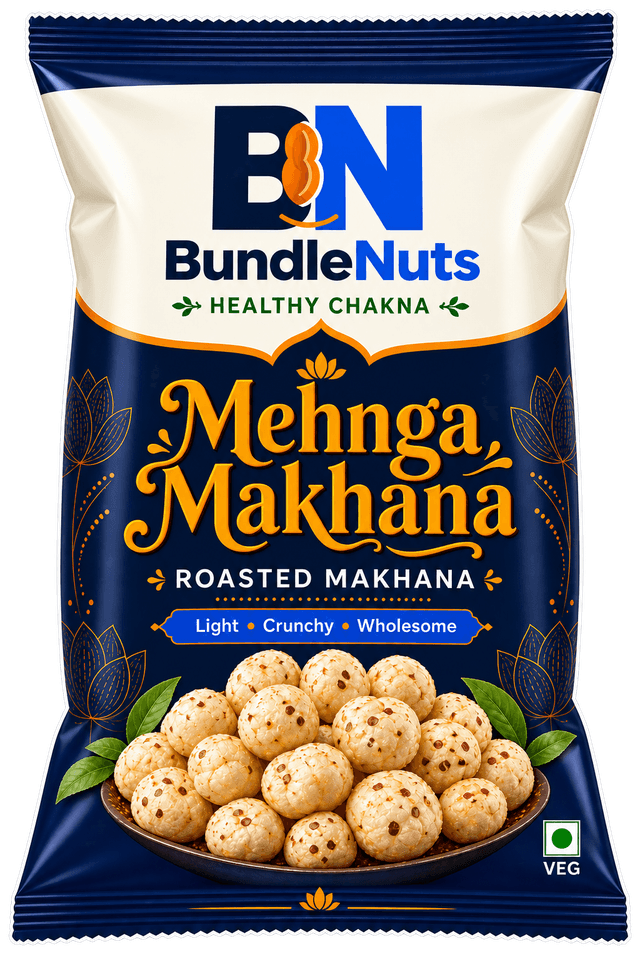
At BN BundleNuts, our Daily Chakhna and Healthy Chakhna ranges bring clean, honest Indian roasting to modern workplaces and homes.
Our Salted Roasted Chana and Masala Roasted Chana SKUs feature premium bold Bengal gram legumes, slow-roasted in hot-air roasters and seasoned with authentic regional spices.
Offered in 35g single-serve impulse pouches, 70g desk packs, 200g family value pouches, and 1kg institutional B2B packs, BundleNuts ensures zero trans fats, clean fingers, and dependable FMCG quality for every tea break.